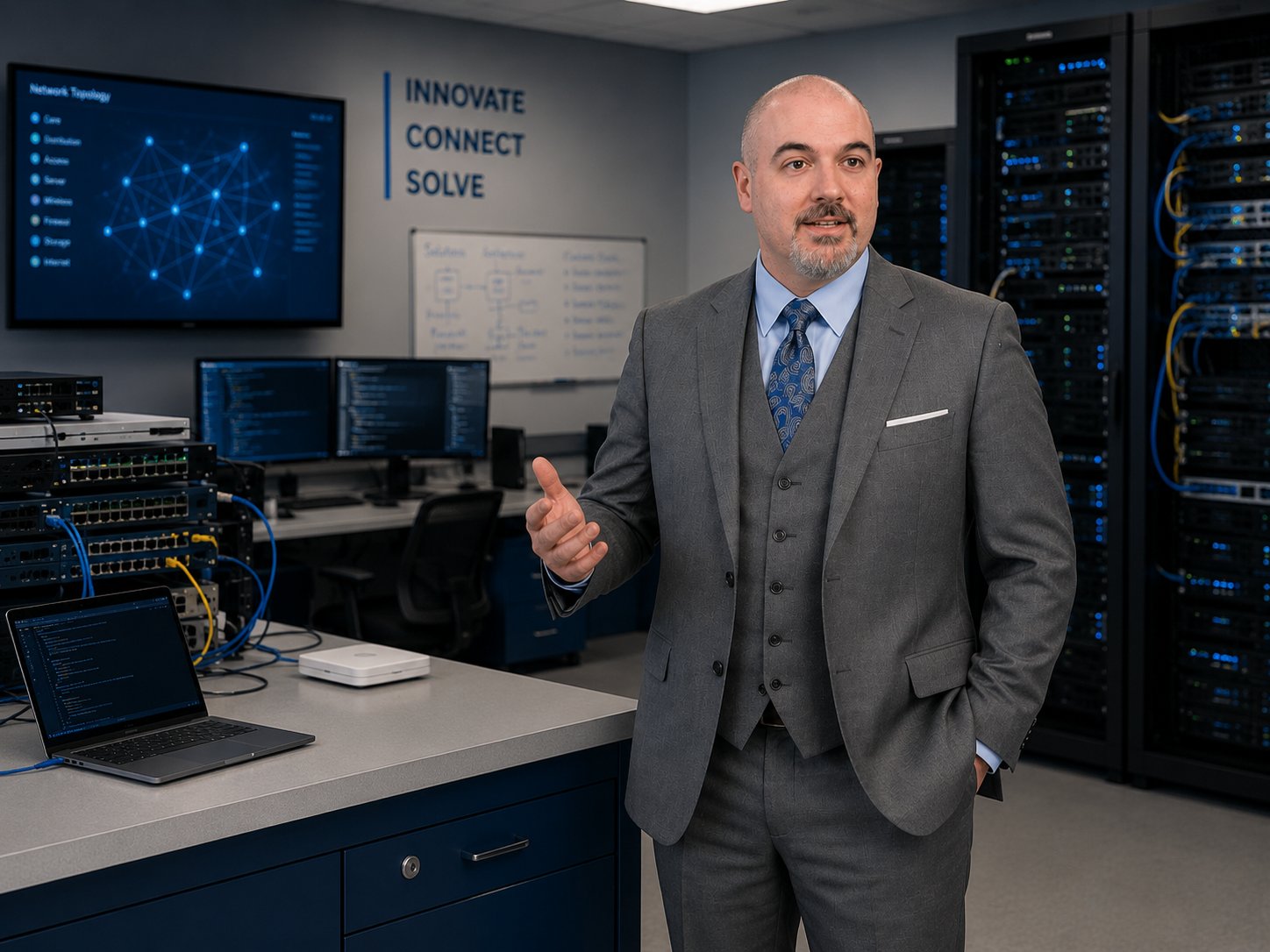
Executive Technology Leadership
30+ Years. 40+ Organizations.
One Trusted Leader.
Enterprise Governance · Operational Resilience · Zero Trust · Advanced Systems Architecture · AI and Automation Strategy
Executive Profile

Curious by nature. Deliberate by discipline. Servant leader by conviction.
John Rector is an executive technology and cybersecurity leader whose career spans enterprise modernization, AI-enabled transformation, operational resilience, and engineering-driven governance across federal, defense, intelligence, financial, healthcare, and commercial environments. His work has included securing $2.3 trillion in annual financial transactions, governing portfolios exceeding $3 billion, and supporting more than 40 organizations across national security, critical infrastructure, and commercial sectors.
He combines deep engineering and systems architecture expertise with executive governance leadership, enabling organizations to operationalize scalable, automated, and resilient technology ecosystems capable of supporting high-consequence and mission-critical operations.
His background spans executive leadership roles across federal, defense, intelligence, healthcare, financial, and commercial sectors, including work supporting the FBI, U.S. Army, U.S. Air Force, SEC, IRS, Maryland Department of Information Technology, and large-scale commercial financial systems.
Certifications
Education
- M.S., Information Assurance, Norwich University
- M.Div., Theology, Liberty University
- B.S., Business Administration, University of Phoenix
Clearance
Active TS/SCI with CI Polygraph
Organizational Reach

Broad experience across federal, defense, intelligence, state, local, and commercial environments
I have supported a wide range of agencies and organizations over the course of my career, spanning national security, defense, law enforcement, intelligence, civilian government, state and local government, and commercial sectors.
Experience

A career built across national security, critical infrastructure, financial systems, and commercial enterprise
2024 — Present
Director, Technology Business Line & GRC, CTO
Chinook Systems · Arlington, Virginia
Lead enterprise technology, cybersecurity, governance, risk, compliance, and modernization initiatives for a $60M engineering enterprise operating across highly regulated and mission-critical environments.
- Built scalable governance operating models integrating engineering, security, compliance, and operational stakeholders
- Directed enterprise IT/OT Zero Trust modernization initiatives
- Architected engineering-driven assurance capabilities leveraging AI-enabled analytics, telemetry, automation, and continuous controls validation
- Established CMMC Level 2 aligned governance and operational assurance programs
- Led AI-enabled technology modernization and workflow optimization initiatives
2022 — 2024
Enterprise Risk Advisory & Governance Lead, CISO
NXT · North Bethesda, Maryland
Directed enterprise governance, cybersecurity modernization, operational resilience, and integrated risk management initiatives supporting large-scale state government and regulated sector environments.
- Advised Maryland DoIT executive leadership on enterprise modernization and operational resilience initiatives
- Built scalable governance operating models integrating telemetry, risk analytics, and continuous monitoring
- Directed implementation of integrated risk management and governance capabilities
- Expanded continuous monitoring and analytics-driven visibility capabilities
2011 — 2022
Founding Partner, Chief Information Security Officer
SVD Solutions · Washington, DC
Founded and led a consulting organization delivering enterprise cybersecurity, governance, modernization, operational resilience, and advanced systems engineering capabilities across federal, defense, intelligence, and commercial sectors.
- Directed enterprise cybersecurity strategy across FBI, SEC, IRS, U.S. Army, U.S. Air Force, and commercial organizations
- Built multidisciplinary engineering, governance, and cybersecurity teams supporting large-scale modernization initiatives
- Architected advanced intelligence and cloud platform environments supporting secure multi-agency collaboration
- Led advanced operational resilience and Zero Trust modernization initiatives
Insights
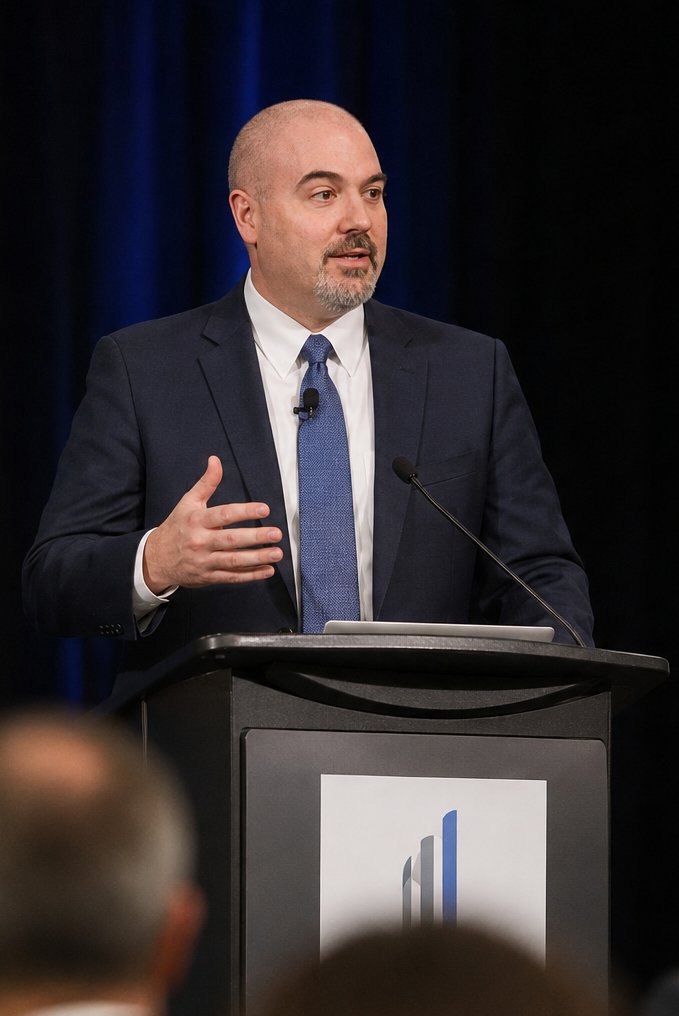
Perspectives and technical papers drawn from federal agencies, defense programs, financial institutions, and commercial enterprises spanning three decades of operational reality
Each piece connects to a specific thread of experience across federal, defense, and commercial environments. Perspectives are written in first person and draw from real operational history. Technical papers go deeper on specific subject areas.
What $2.3 Trillion Taught Me About Securing What You Cannot Afford to Lose
Code Red and Nimda forced a security reckoning in 2001. Project Glasswing is producing a larger one now. What those two moments share tells you everything about how to respond to the one happening today.
ReadThe Accidental AI Insider Threat: Managing Enterprise Risk in the Era of Workforce AI Democratization
The most significant AI risk in most enterprises is not a sophisticated external attack. It is a well-intentioned employee who does not fully understand what they just automated. This piece examines how AI is redistributing technical capability faster than organizations are building the governance infrastructure to manage it.
ReadThirty Years In: What I Actually Believe About AI and Enterprise Risk
Not a prediction piece. A set of convictions developed across three decades of watching technology cycles repeat themselves, applied to the AI moment organizations are navigating right now.
ReadZero Trust Across IT/OT Boundaries: Where Most Programs Break Down
Most Zero Trust programs fail at the IT/OT boundary not because the model is wrong, but because organizations impose enterprise assumptions onto industrial environments that operate under fundamentally different constraints. This paper examines why, and what a successful implementation actually requires.
ReadForthcoming
Resources
Recommended reading across security, governance, AI, and critical infrastructure
A curated selection of frameworks, standards, and references I actually use and recommend. Not a comprehensive index, just a short list of things worth knowing.
Contact
Available for
Executive Advisory · Board Roles · Strategic Consulting · Technology Leadership
Let's discuss how I can support your organization
Available for executive advisory engagements, board roles, technology leadership positions, and strategic consulting in enterprise modernization, cybersecurity, governance, AI strategy, and emerging technologies.
Location
East Coast (ET) · Available across global time zones
Primary Location Served
Washington, D.C. Metropolitan Area
Other Areas Frequently Served
New York City · Atlanta · Austin · Dallas-Fort Worth · Denver · Boston · Seattle · San Francisco / Silicon Valley
Resume
Download ResumeRecommendations
Read recommendations from colleagues and clients on LinkedIn